
Cold Pressed Oils vs Refined Oils: Which One Should You Choose?
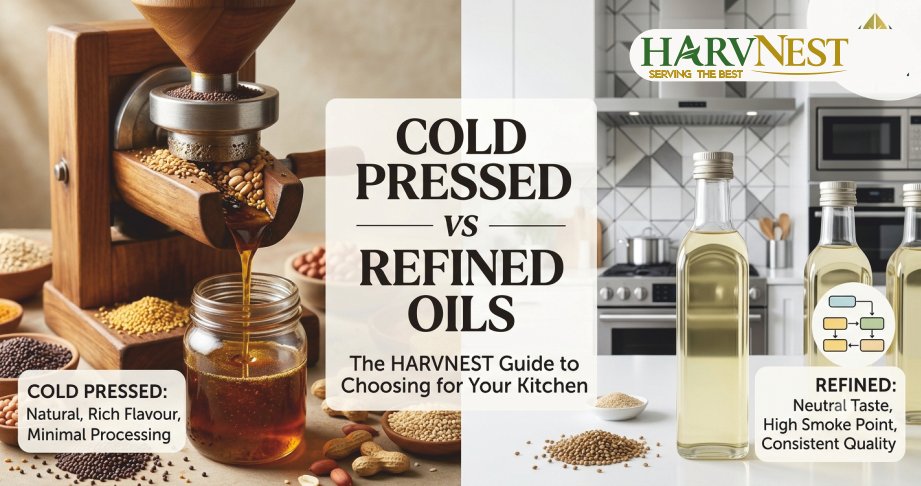
Cooking oil is one of the most important ingredients in every kitchen. Yet many consumers don't know how the oil they use is made or how processing can affect its flavour and nutritional profile.
Understanding the difference between cold pressed oils and refined oils can help you make an informed choice for your family's everyday cooking.
What Is Cold Pressed Oil?
Cold pressed oil is extracted from seeds or nuts using mechanical pressure at controlled, relatively low temperatures. Because excessive heat and harsh chemical refining are avoided, the oil retains much of its natural aroma, flavour, and naturally occurring plant compounds.
Common cold pressed oils include:
- Mustard Oil
- Groundnut Oil
- Sesame Oil
- Coconut Oil
- Sunflower Oil
What Is Refined Oil?
Refined oil is produced through multiple processing steps designed to remove impurities, colour, odour, and other naturally occurring substances. Depending on the manufacturing process, this may involve degumming, neutralisation, bleaching, deodorisation, and filtration.
Refining creates an oil with a lighter colour, milder taste, and greater consistency, making it suitable for many commercial applications.
Cold Pressed Oil vs Refined Oil
| FeatureCold Pressed OilRefined Oil | ||
| Extraction | Mechanical pressing | Multiple refining processes |
| Processing | Minimal | Extensive |
| Flavour | Rich and natural | Mild and neutral |
| Aroma | Characteristic of the seed | Reduced aroma |
| Colour | Naturally darker | Lighter and clearer |
| Naturally Occurring Compounds | Better preserved | Some may be reduced during refining |
Understanding Smoke Point
The smoke point is the temperature at which an oil begins to smoke.
Different oils have different smoke points, regardless of whether they are cold pressed or refined.
For example:
- Cold pressed mustard oil is commonly used for sautéing, stir-frying, and traditional Indian cooking.
- Groundnut oil works well for everyday cooking and frying.
- Sesame oil is excellent for seasoning and Asian-inspired dishes.
- Coconut oil is suitable for many home-cooking applications.
The best oil depends on your cooking method and the type of dish you are preparing.
Which Oil Is Right for Everyday Cooking?
There isn't one perfect oil for every recipe. Nutrition experts often recommend using a variety of edible oils over time to create a balanced cooking pattern.
Choose oils that:
- Match your cooking style
- Come from trusted manufacturers
- Are properly packaged
- Clearly list their ingredients and source
- Meet recognised food safety standards
Why More Families Are Choosing Cold Pressed Oils
Many people prefer cold pressed oils because they appreciate:
- Their natural flavour and aroma
- Minimal processing
- Traditional extraction methods
- Rich taste in everyday cooking
These qualities have contributed to the growing popularity of cold pressed oils in modern kitchens.
Why Choose HARVNEST Cold Pressed Oils?
At HARVNEST, quality begins at the source.
We carefully select premium-quality seeds from trusted suppliers and use controlled cold processing to preserve the oil's authentic flavour and natural goodness. Every batch is produced with a commitment to purity, consistency, and quality, so you can cook with confidence.
The HARVNEST Promise
- Best sourced raw materials
- Carefully selected premium-quality seeds
- Cold processed for authentic taste and quality
- Hygienically packed for freshness
- Quality you can trust for your family's kitchen
Experience the HARVNEST Difference
Choose HARVNEST Cold Pressed Oils—crafted from the finest sourced raw materials and carefully cold processed to bring purity, flavour, and quality to every meal.
HARVNEST – Pure by Nature. Trusted Every Day.